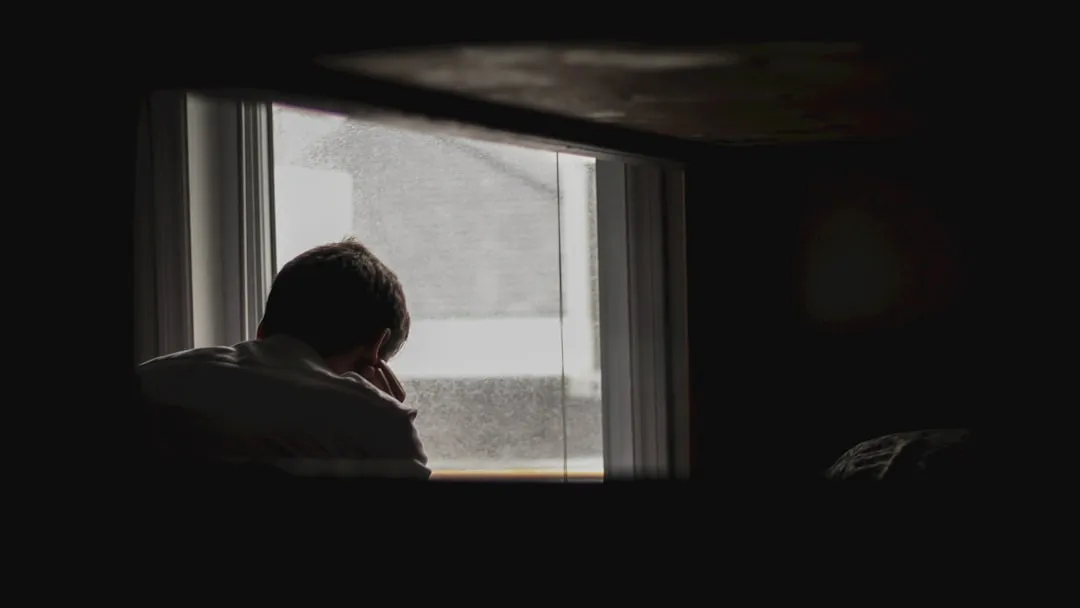

When grief feels too heavy to carry alone
Maybe you've lost someone close to you — a parent, a spouse, a child, a friend. Maybe the loss is less visible to people around you: the end of a marriage, a diagnosis that changed everything, a miscarriage, a pet who was family, a job or identity you didn't choose to let go of, or a version of your life you expected to have and won't get back. Grief attaches to all of these, whether or not the people around you recognize the loss as "grief-sized."
Externally, grief shows up in very ordinary-looking ways: trouble sleeping, forgetting things, avoiding calls, dreading holidays or anniversaries, or feeling strangely fine one day and flattened the next. None of that means you're grieving wrong, since grief rarely follows the tidy stages people describe.
What grief does on the inside
Internally, grief rarely stays simple sadness for long; it often surfaces as numbness, guilt, irritability, anger, relief tangled with shame, or exhaustion that sleep doesn't fix. You might feel like you should be "further along" than you are, or worry that grieving too openly, or not openly enough, makes you a burden to the people around you.
Many people carrying grief also feel isolated in it, even when surrounded by people who care. Grief has a way of making a room feel quieter than it is — friends run out of things to say, life moves on around you, and the loss stays exactly as present as it was the day it happened.
"I still miss them, but I don't feel like I'm drowning anymore."
Why grief deserves more than "just give it time"
Our culture is often uncomfortable with grief. People are frequently told, directly or indirectly, to be strong, to stay busy, to not dwell on it, or to be grateful for what they still have. That pressure to grieve quickly and quietly is unkind and unfair. Grief is not a problem to be efficiently solved or a phase with a deadline.
No one should have to carry a significant loss entirely alone, on a timeline dictated by other people's comfort. You deserve a place where grief can be as messy, slow, non-linear, or unresolved as it is — without being managed, minimized, or rushed. Grief counseling exists to be exactly that place.
This matters clinically too, not just relationally. Grief that gets rushed rather than processed tends to go underground and resurface later, often in a form that's harder to recognize as grief at all. Slowing down now tends to be the more direct path forward.
A space to grieve without a script
There is no right way to grieve, and you won't be handed one here. Our counselors offer a judgment-free space to feel what you feel, at your own pace, without being steered toward closure before you're ready. For clients who want it, we integrate faith, prayer, and spiritual reflection into the process — including space to sit with grief-related spiritual struggle, like anger at God or questions about suffering; for clients who don't want that integration, that's entirely your call.
Counselors trained to sit with grief
Grief work at Freedom Counseling Services is led by counselors with specific training in loss, trauma-informed care, and holistic, person-centered approaches — not generalists applying a one-size-fits-all framework. Staci Harrub, LPCA, is EMDR trained and a Prepare and Enrich Facilitator, and works from a psychodynamic, trauma-informed, whole-person lens that treats grief as something that touches the emotional, relational, physical, and spiritual parts of a person's life, not just their mood.
Across the practice, our counselors draw from CBT, ACT, EMDR, attachment-focused work, and person-centered therapy — approaches with clinical grounding, applied to grief specifically rather than borrowed from a generic anxiety or depression protocol. When faith is part of your grief, that training extends to holding spiritual questions with the same care as clinical ones.
Grief rarely affects only one person. If a loss is also touching your marriage, your family, or how you're able to show up for your kids, we can loop in couples or family sessions alongside individual grief work, or refer you to a counselor who specializes in that overlap. You don't have to sort out which "kind" of counseling you need before reaching out — that's part of what the matching process is for.
What life can look like after grief counseling
Success in grief counseling means the loss stops being the only thing you can see, even though it still matters. Clients who do this work describe being able to remember the person or the life they lost without being flattened by it every time. They develop real language for what they're carrying, instead of a vague, heavy "I'm not okay." They find they can be present again — at work, in relationships, in ordinary moments — without grief ambushing them the way it once did.
For many clients, this also includes a shift in their relationship with faith: not necessarily answers to why the loss happened, but a sense that their grief, their anger, and their questions are welcome in that relationship rather than a failure of faith.
Clients often describe this shift in very concrete terms: "I can talk about them without falling apart." "I laughed today and it didn't feel like betrayal." "I still miss them, but I don't feel like I'm drowning anymore." These moments don't mean the grief is finished. Grief for a significant loss rarely has a true finish line; it simply finds a place in your life that no longer occupies all of it.
What happens when grief goes unaddressed
Grief that isn't given space to move tends to relocate rather than disappear. Unprocessed grief commonly shows up later as chronic anxiety, depression, irritability that strains relationships, physical health problems, or a kind of low-grade numbness that flattens more of life than just the area of the original loss. Some people manage this by staying constantly busy, which can work for a while and then stop working all at once, often around an anniversary, another loss, or a life transition that reopens the original wound.
Waiting doesn't make the loss easier to ignore; the weight of carrying it alone tends to grow in the background of an otherwise normal-looking life.
This is a well-documented pattern in grief research: prolonged, unsupported grief is linked to higher rates of depression, anxiety disorders, and physical health problems, and it tends to strain the closest relationships the most, precisely because the people you love are also the ones who eventually run out of patience for a grief that never seems to move. Getting support early doesn't shortcut the grieving process, but it does reduce the odds that unprocessed loss reshapes the rest of your life in ways you don't see coming.